Each pill and medication that appears in the pharmacy underwent long research from lab experiments to extensive volunteer tests, taking up to a decade or even more to create something really effective and safe. One of the key aspects of such research is the clinical trials.
The Clinical trials play an essential role in the development of any medicine. It is through trials that scientists define if the medicine or another type of therapy is safe and effective. If there was no such research as clinical trials, physicians could not find out anything about the medicine and their patients will be at risk.
During the last years, clinical trials have become more and more evident especially during the COVID-19 pandemic when vaccines were developed and approved in record time without breaking any of the safety rules. Nevertheless, clinical trials are not just about vaccines; they give us everything that medicine provides us with today.
This article describes what clinical trials are, what phases exist, their importance, and what impact they have on medicine.its is very complex in which small pimple like acne produce in our mouth is is pain so much
What Are Clinical Trials?
Clinical trials are carefully designed research studies involving human volunteers. Their primary purpose is to evaluate the safety and effectiveness of medical interventions before they become available to the general public.
These interventions may include:
- New medicines
- Vaccines
- Medical devices
- Diagnostic tests
- Surgical procedures
- Gene therapies
- Lifestyle and behavioral treatments
Clinical trials follow strict scientific protocols approved by regulatory authorities and ethics committees. Researchers carefully monitor every participant throughout the study to ensure safety and collect accurate data.
Before participating, every volunteer signs an Informed Consent Form, which explains:
- The purpose of the study
- Potential benefits
- Possible risks
- Study procedures
- Participant rights
Participation is always voluntary, and volunteers can withdraw from a study at any time without affecting their future medical care.
Why Are Clinical Trials Important?
Modern healthcare relies on scientific evidence rather than assumptions. Laboratory experiments and animal studies provide valuable information, but they cannot accurately predict how the human body will respond to a treatment.
Clinical trials answer critical questions such as:
- Is the treatment safe?
- Does it actually work?
- What dosage provides the best results?
- Are there any side effects?
- Who benefits the most from the treatment?
- What happens after long-term use?
The Four Stages of Clinical Trials
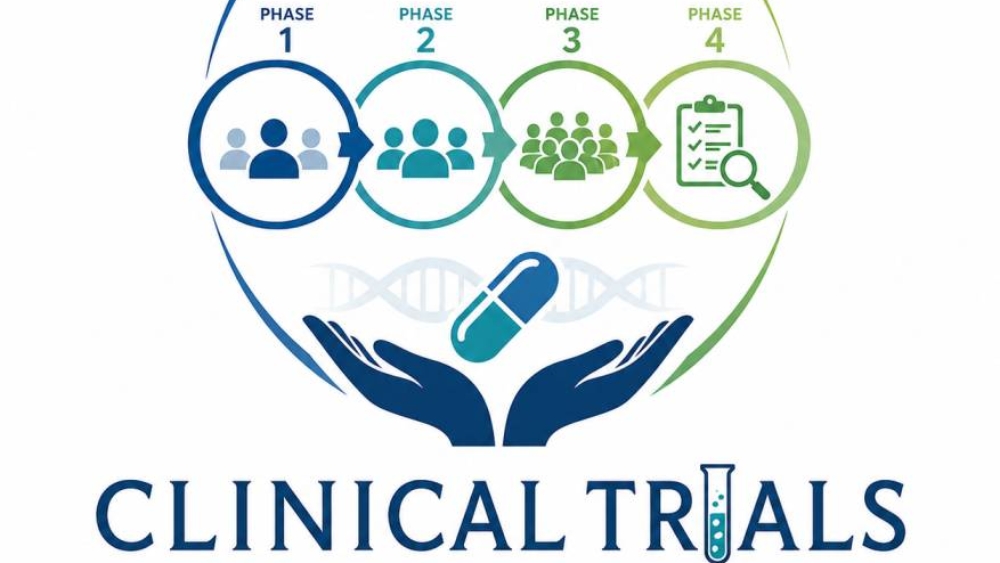
Clinical trials are usually conducted in four sequential phases. Each phase serves a different purpose and gradually builds evidence about the treatment.
Phase I: Safety Evaluation
The first stage involves a small group of healthy volunteers or patients.
Main Objectives
- Assess safety
- Determine safe dosage
- Identify side effects
- Study how the body absorbs and processes the medicine
Phase II: Testing Effectiveness:
If Phase I results are encouraging, the treatment moves into Phase II.
This stage usually includes 100–300 patients who have the disease or condition the treatment is intended to address.
Researchers evaluate:
- Treatment effectiveness
- Optimal dosage
- Short-term safety
- Common side effects
Many experimental medicines fail during this stage because they do not demonstrate sufficient effectiveness. However, successful Phase II trials provide confidence for larger studies.
Phase III: Confirming Results:
Phase III is the largest and most comprehensive stage of clinical research.
These trials often involve 300 to several thousand participants across multiple hospitals and countries.
Researchers compare the new treatment with:
- Existing standard treatments
- Placebos (where ethically appropriate)
Key goals include:
- Confirming effectiveness
- Monitoring safety
- Detecting uncommon side effects
- Comparing patient outcomes
- Collecting evidence for regulatory approval
Because of the large participant population, Phase III provides statistically reliable data that healthcare authorities use when deciding whether to approve the treatment.
Phase IV: Post-Marketing Surveillance:
This kind of research does not end after a drug has been introduced into the market.
Phase IV research continues studying approved medications.
It includes:
Safety of long-term use
Rare adverse reactions
Drug-drug interactions
Effectiveness in other populations
Effects of treatment
In some cases, Phase IV research helps to discover new adverse effects that only become visible when millions of people start taking the medication.
How Clinical Trials Protect Patients
Patient safety remains the highest priority throughout every stage of clinical research.
Several safeguards are built into the process:
Ethics Committee Approval
Every study must be reviewed by an independent ethics committee before recruitment begins.
Regulatory Oversight
National regulatory agencies carefully examine study protocols and monitor compliance.
Informed Consent
Participants receive complete information before deciding whether to join.
Continuous Monitoring
Researchers regularly review participant health and stop the study immediately if serious concerns arise.
Confidentiality
All participant information is securely protected according to privacy regulations.
Who Can Participate?
Clinical trials require participants who meet specific eligibility criteria.
These criteria may include:
- Age
- Gender
- Medical condition
- Disease stage
- Previous treatments
- Current medications
- General health status
Some studies recruit healthy volunteers, while others specifically seek patients with certain medical conditions. Clinical trials increasingly aim to include participants from diverse backgrounds to ensure treatments work effectively across different populations.
Benefits of Participating in Clinical Trials
Many volunteers choose to participate because they want to contribute to medical progress.
Some potential benefits include:
Access to Innovative Treatments
Participants may receive new therapies years before they become commercially available.
Expert Medical Care
Participants are often monitored by specialists throughout the study.
Helping Future Generations
Every volunteer contributes valuable information that may improve healthcare worldwide.
Advancing Science
Each clinical trial expands medical knowledge and supports future discoveries.
Are Clinical Trials Risky?
Every medical treatment carries some level of risk, including experimental therapies.
Possible risks include:
- Unknown side effects
- Treatment may not work
- Additional hospital visits
- Frequent medical tests
- Unexpected reactions
Clinical Trials and Medical Innovation
Many of today’s greatest healthcare achievements exist because of clinical research.
Examples include:
- COVID-19 vaccines
- Cancer immunotherapy
- Artificial heart valves
- Organ transplantation improvements
- Diabetes medications
- HIV treatments
- Gene therapy
- Precision medicine
Without clinical trials, these life-changing innovations would never have become available.
Challenges Facing Clinical Trials
Despite their importance, clinical trials face several challenges.
These include:
- Recruiting enough participants
- High research costs
- Lengthy approval processes
- Maintaining participant diversity
- Managing large volumes of clinical data
Researchers are increasingly using digital technologies to overcome these challenges. Artificial intelligence, electronic health records, wearable devices, and telemedicine are making clinical research more efficient and accessible than ever before.
The Future of Clinical Research
Healthcare is rapidly evolving, and so are clinical trials.
Future trends include:
- Decentralized virtual clinical trials
- AI-assisted patient recruitment
- Remote health monitoring
- Personalized medicine
- Genomic-based therapies
- Digital data collection
- Faster regulatory collaboration