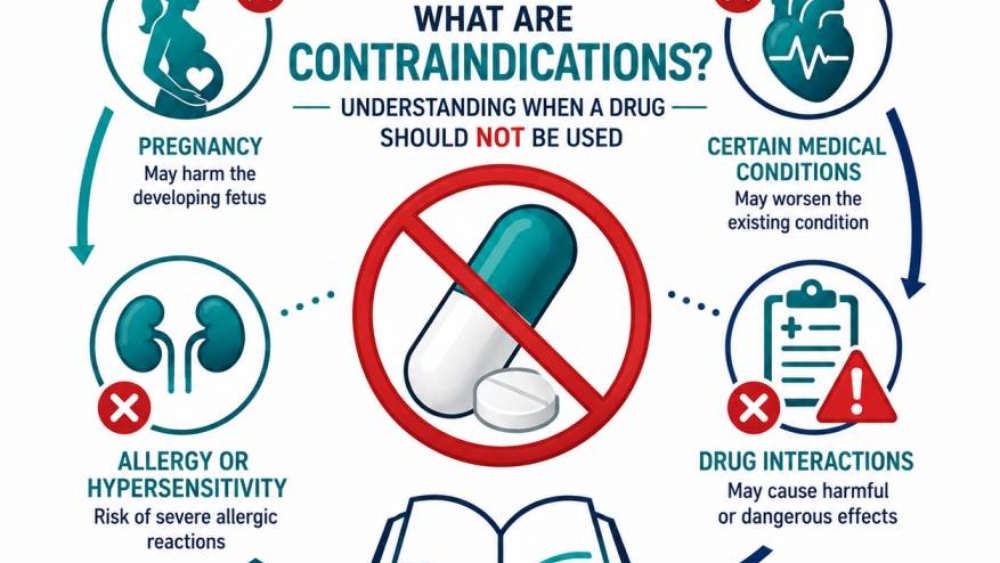
Introduction:
Modern medicine has made tremendous progress in terms of prevention, diagnosis, and treatment of various diseases. On a daily basis, millions of people use different drugs to cope with chronic diseases, ease their pain, treat various infections, and enhance their well-being. But not all drugs are meant to be used by everyone. A certain medicine can be effective for one person but dangerous for another because of specific diseases, allergic reactions, age, pregnancy, or combination with other drugs. Here comes the role of contraindications.
Contraindications belong to the main principles of proper medication use. They enable healthcare providers to recognize circumstances when taking a particular drug, conducting a medical procedure, or undergoing some treatment is not recommended because of its risks outweighing possible advantages. Contraindications knowledge enables reducing the risk of adverse drug reactions and possible complications.
The current article is devoted to the explanation of what contraindications are, their types, examples, causes, importance, and how contraindications are evaluated by healthcare specialists prior to prescribing medications.
What Are Contraindications?
A contraindication is a specific condition, disease, circumstance, or factor that makes the use of a particular medication, treatment, or medical procedure inappropriate because it may cause harm to the patient.
In simple terms, a contraindication serves as a warning that a medicine should either not be used at all or should only be used with great caution. Contraindications are identified through clinical research, medical evidence, and years of patient safety monitoring.
Healthcare providers always review a patient’s medical history before prescribing medication to determine whether any contraindications exist.
Why Are Contraindications Important?
Contraindications play a vital role in ensuring patient safety. Ignoring them can lead to severe health complications, treatment failure, or even life-threatening situations.
The importance of contraindications includes:
- Preventing serious adverse drug reactions.
- Reducing medication-related complications.
- Protecting patients with chronic diseases.
- Improving treatment effectiveness.
- Helping healthcare providers choose safer alternatives.
- Supporting personalized patient care.
- Minimizing hospital admissions caused by medication errors.
Types of Contraindications.
Contraindications are generally divided into two major categories: absolute contraindications and relative contraindications.
1. Absolute Contraindications
An absolute contraindication means that a drug or treatment should never be used because the risk of serious harm is extremely high.
In these situations, healthcare providers must choose an alternative therapy.
Examples include:
- Prescribing penicillin to a patient with a confirmed severe penicillin allergy.
- Using certain medications during pregnancy when they are known to cause birth defects.
- Administering a drug that previously caused life-threatening anaphylaxis in the same patient.
Absolute contraindications are considered non-negotiable because patient safety is the highest priority.
2. Relative Contraindications
A relative contraindication means that a medication may still be used if the expected benefits outweigh the potential risks.
The healthcare provider carefully evaluates the patient’s condition before making a decision.
Examples include:
- Certain blood pressure medications in elderly patients.
- Medications that may affect liver function in individuals with mild liver disease.
- Drugs that increase bleeding risk in patients taking anticoagulants.
Common Causes of Contraindications.
Several factors can create contraindications for medications.
Drug Allergies
Drug allergies are among the most common reasons for contraindications. Allergic reactions can range from mild skin rashes to severe anaphylactic shock.
Healthcare providers always ask about previous allergic reactions before prescribing medication.
Pregnancy
Some medications can cross the placenta and affect fetal development. Certain drugs may increase the risk of birth defects, miscarriage, or developmental problems.
Therefore, pregnancy is an important consideration when selecting medications.
Breastfeeding
Many drugs pass into breast milk and may affect nursing infants. Some medications are considered safe, while others should be avoided or used only under medical supervision.
Existing Medical Conditions
Certain diseases increase the likelihood that a medication could cause harm.
Examples include:
- Liver disease
- Kidney disease
- Heart disease
- Asthma
- Glaucoma
- Epilepsy
- Stomach ulcers
Healthcare providers adjust treatment plans according to these conditions.
Age
Children and older adults often process medications differently from healthy adults.
Older adults may experience slower drug metabolism, while children require specially calculated doses based on body weight.
Drug Interactions
Some medications should not be taken together because they alter each other’s effects.
Drug interactions may:
- Increase toxicity.
- Reduce treatment effectiveness.
- Cause dangerous side effects.
A complete medication history helps prevent harmful interactions.
Examples of Contraindications
Understanding practical examples makes the concept easier to grasp.
Aspirin
Aspirin may be contraindicated in patients who:
- Have active stomach ulcers.
- Experience severe aspirin allergy.
- Have certain bleeding disorders.
Non-Steroidal Anti-Inflammatory Drugs (NSAIDs)
NSAIDs should be used cautiously in individuals with:
- Kidney disease
- Heart failure
- Peptic ulcers
- Uncontrolled hypertension
Blood Thinners
Anticoagulant medications may be contraindicated in patients with active internal bleeding or severe bleeding disorders.
Certain Antibiotics
Some antibiotics should not be prescribed to patients with known allergies to that antibiotic class.
Others may be avoided during pregnancy because of potential fetal risks.
Vaccines
Live vaccines are generally contraindicated in individuals with severely weakened immune systems because they may cause infection instead of protection.
Contraindications vs. Precautions.
Although these terms are often used together, they have different meanings.
A contraindication indicates that a drug should not be used because the potential harm is significant.
A precaution means extra care should be taken during treatment, but the medication may still be appropriate with close monitoring.
For example, mild kidney impairment may require a lower drug dose rather than complete avoidance.
Understanding this distinction helps healthcare providers make informed prescribing decisions.
How Healthcare Providers Identify Contraindications.
Before prescribing medication, healthcare professionals gather detailed information about the patient.
This includes:
- Medical history
- Current illnesses
- Previous surgeries
- Medication history
- Drug allergies
- Family history
- Pregnancy status
- Breastfeeding status
- Lifestyle habits
- Laboratory test results
This comprehensive evaluation helps identify potential contraindications and ensures that the safest treatment option is selected.
The Role of Electronic Medical Records
Modern healthcare systems increasingly use electronic medical records (EMRs) to improve medication safety.
Many prescribing systems automatically alert healthcare providers if:
- A patient has a documented drug allergy.
- Two prescribed medications may interact.
- A medication is contraindicated because of an existing disease.
- The prescribed dose exceeds recommended limits.
These computerized safety systems have significantly reduced medication errors worldwide.
Contraindications in Special Populations.
Children
Children are not simply small adults. Their organs are still developing, making them more sensitive to certain medications.
Pediatric dosing requires careful calculation based on age and body weight.
Older Adults
Age-related changes in liver function, kidney function, and body composition affect how medications behave in older adults.
Polypharmacy—the use of multiple medications—also increases the risk of contraindications and drug interactions.
Pregnant Women
Medication safety during pregnancy requires careful consideration because drugs may affect both the mother and the developing fetus.
Only medications with well-established safety profiles should be used whenever possible.
Patients with Chronic Diseases
Individuals with diabetes, heart disease, kidney disease, liver disease, or respiratory disorders often require individualized medication plans to avoid contraindications.
Can Contraindications Change Over Time?
Yes. Contraindications may change as new research becomes available or as a patient’s health status changes.
For example:
- A medication previously considered unsafe during pregnancy may later be found to be acceptable after additional studies.
- A patient who develops kidney disease may no longer be able to safely use medications they previously tolerated.
- New drug interactions may be discovered through ongoing clinical research.
Healthcare professionals continually update their knowledge to provide the safest care.
How Patients Can Help Prevent Contraindication Problems
Patients play an important role in medication safety by communicating openly with healthcare providers.
Helpful practices include:
- Informing doctors about all allergies.
- Sharing a complete list of medications and supplements.
- Reporting pregnancy or plans to become pregnant.
- Mentioning any chronic medical conditions.
- Informing healthcare providers about previous adverse drug reactions.
- Following prescribed doses carefully.
- Asking questions whenever instructions are unclear.