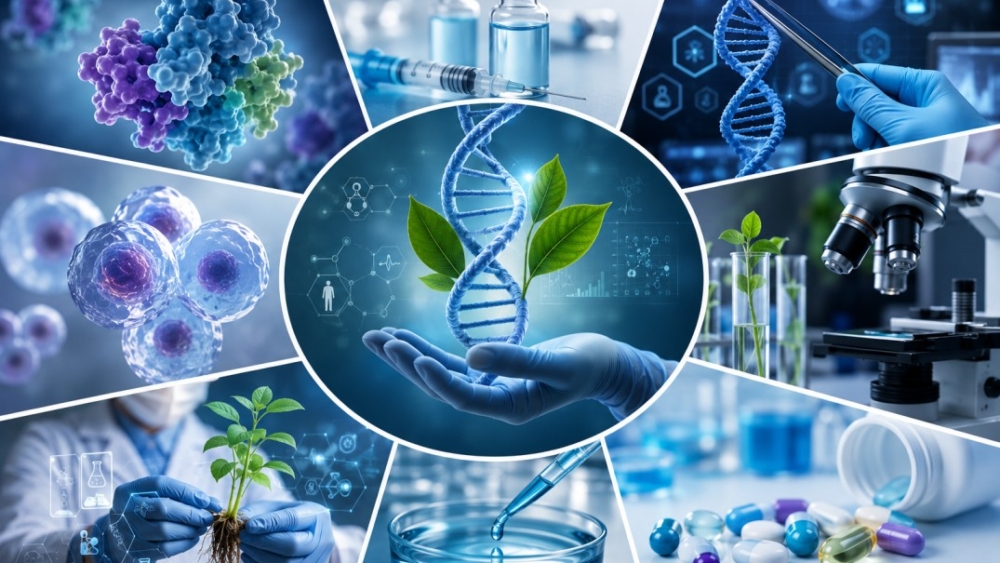
Biotechnology plays a vital role in improving healthcare by using living organisms, cells, and biological processes to develop medical products and treatments. One major application is the production of vaccines, which help prevent diseases such as COVID-19, hepatitis, and polio. Biotechnology is also used to manufacture recombinant proteins like insulin for diabetes treatment and growth hormones for various disorders.
In diagnostics, advanced techniques such as PCR and genetic testing enable early and accurate detection of diseases. Gene therapy is another important application, where defective genes are replaced or corrected to treat genetic disorders. Biotechnology contributes to the development of monoclonal antibodies used in treating cancers, autoimmune diseases, and infections. Tissue engineering and stem cell therapy help repair or replace damaged tissues and organs. Additionally, biotechnology supports personalized medicine by tailoring treatments based on an individual’s genetic makeup. Overall, biotechnology has revolutionized healthcare by enhancing disease prevention, diagnosis, treatment, and patient care outcomes worldwide.
- Vaccine Development
- Genetic Testing and Disease Diagnosis
- Personalized medicine
- Production of Biopharmaceuticals
- Regenerative Medicine and Stem Cell Therapy
- Cancer Treatment
- Tissue Engineering
1. Vaccine Development.
Biotechnology plays an important role in vaccine development by helping scientists identify disease-causing organisms and create effective vaccines. Techniques such as recombinant DNA technology and genetic engineering are used to produce safer vaccines with fewer side effects. Biotechnology enables the development of advanced vaccines, including mRNA and subunit vaccines. It also supports large-scale vaccine production, quality control, and testing. The rapid development of COVID-19 vaccines demonstrated how biotechnology can accelerate vaccine research and improve global public health.
Example:
- Recombinant vaccines for hepatitis B
- mRNA vaccines for COVID-19
- Advanced vaccines for influenza and human papillomavirus (HPV)
Benefit:
- Prevention of life-threatening diseases
- Reduced spread of infections
- Improved public health
- Faster vaccine development during outbreaks
2. Genetic Testing and Disease Diagnosis.
Genetic Testing and Disease Diagnosis is the process of analyzing an individual’s DNA, genes, chromosomes, or proteins to identify genetic changes associated with diseases or inherited conditions. It helps healthcare professionals detect, confirm, or predict genetic disorders and assess an individual’s risk of developing certain diseases. Genetic testing is used for diagnosing inherited conditions, prenatal screening, newborn screening, carrier testing, and personalized medicine. By identifying specific genetic mutations, it enables early detection, accurate diagnosis, and appropriate treatment planning. It also helps families understand inherited health risks and make informed medical and reproductive decisions. Advances in genomic technologies have made genetic testing an essential tool in modern healthcare.
Example
A woman with a family history of breast cancer undergoes genetic testing. The test reveals a mutation in the BRCA1 Gene gene, which is associated with a higher risk of breast and ovarian cancer. Based on this result, doctors can diagnose a hereditary cancer predisposition, recommend regular screenings, and suggest preventive measures or treatments. This early diagnosis helps reduce the risk of developing advanced cancer and allows family members to consider testing as well.
Benefit.
- Early detection of genetic disorders
- Identification of disease-causing mutations
- Prenatal screening
- Detection of infectious diseases
3. Personalized medicine.
Personalized medicine is a healthcare approach that tailors medical treatment, prevention, and diagnosis to an individual’s unique genetic makeup, lifestyle, environment, and health history. By using genetic and molecular information, it helps predict disease risk, select the most effective therapies, and reduce adverse drug reactions. Personalized medicine improves patient outcomes by providing targeted treatments rather than a one-size-fits-all approach. It is widely used in areas such as cancer care, pharmacogenomics, and chronic disease management.
Example.
A patient diagnosed with breast cancer undergoes genetic testing of the tumor. The results show that the cancer cells overexpress the HER2 Gene protein. Based on this genetic information, doctors prescribe Trastuzumab (Herceptin), a targeted therapy specifically effective against HER2-positive breast cancer. Instead of using a general treatment approach, the therapy is customized to the patient’s genetic profile, improving treatment effectiveness and reducing unnecessary side effects. This is a practical example of personalized medicine.
Benefit.
- More effective treatments
- Reduced adverse drug reactions
- Better patient outcomes Optimized drug dosage
4. Production of Biopharmaceuticals
Production of Biopharmaceuticals is the process of developing and manufacturing medicines using living organisms, cells, or biological systems rather than traditional chemical synthesis. Biopharmaceuticals include therapeutic proteins, monoclonal antibodies, vaccines, hormones, and gene-based therapies used to treat various diseases. The production process involves identifying a target gene, inserting it into host cells such as bacteria, yeast, or mammalian cells, and cultivating these cells under controlled conditions to produce the desired biological product. The product is then purified, tested for quality, safety, and efficacy, and formulated for medical use. Biopharmaceutical production relies heavily on biotechnology and genetic engineering techniques, enabling the large-scale manufacture of complex medicines for conditions such as cancer, diabetes, autoimmune disorders, and infectious diseases.
Biotechnology enables the production of biopharmaceuticals, which are medicines derived from biological sources. These drugs are often more effective and targeted than traditional medications.
Example.
- Insulin for diabetes treatment
- Growth hormones
- Monoclonal antibodies for cancer and autoimmune diseases
- Blood clotting factors for hemophilia
Biopharmaceuticals provide targeted treatment with improved effectiveness and fewer side effects.
5. Regenerative Medicine and Stem Cell Therapy.
Regenerative Medicine and Stem Cell Therapy is a branch of biomedical science that focuses on repairing, replacing, or regenerating damaged tissues, organs, and cells to restore normal function. It uses stem cells, which have the unique ability to develop into different types of specialized cells, making them valuable for treating injuries and diseases. Stem cell therapy involves transplanting or stimulating stem cells to repair damaged tissues caused by conditions such as spinal cord injuries, heart disease, diabetes, and neurodegenerative disorders. Regenerative medicine also includes tissue engineering and gene therapy techniques. This field offers promising solutions for conditions that currently have limited treatment options and aims to improve patient recovery and quality of life.
Example.
A patient suffering from leukemia receives a bone marrow transplant, a common form of stem cell therapy. Healthy blood-forming stem cells from a donor are transplanted into the patient’s body after diseased bone marrow is destroyed. These stem cells regenerate new, healthy blood cells and restore the function of the bone marrow. This treatment helps the patient produce normal red blood cells, white blood cells, and platelets, improving recovery and survival. The procedure is a well-known example of regenerative medicine because it uses stem cells to repair and replace damaged tissues and restore normal body function.
Uses.
- Treatment of spinal cord injuries
- Regeneration of damaged tissues
- Repair of heart muscle after heart attacks
- Treatment of blood disorders
6. Cancer Treatment.
Biotechnology has introduced advanced methods for cancer diagnosis and treatment. Biotechnology has revolutionized cancer treatment through innovative therapies and diagnostic tools.
Examples:
- Immunotherapy
- Targeted therapy
- Monoclonal antibody treatments
- CAR-T cell therapy
These treatments target cancer cells more precisely, reducing damage to healthy tissues and improving patient survival rates.
7. Tissue Engineering.
Tissue engineering combines biotechnology with medical science to create artificial tissues and organs that can replace damaged body parts.
Application.
- Skin grafts for burn victims
- Artificial cartilage
- Organ replacement research
- Wound healing products
Benefits.
- Organ and tissue replacement
- Faster healing of injuries
- Reduced dependence on organ donors
- Improved quality of life
Researchers continue to explore ways to develop functional organs for transplantation using biotechnological methods.
Benefits of Biotechnology in Healthcare.
Biotechnology offers numerous advantages in modern medicine.
- Improved disease prevention and treatment
- Enhanced diagnostic accuracy
- Development of innovative therapies
- Better patient care and outcomes
- Increased life expectancy
- Personalized treatment approaches
- Reduced healthcare costs in the long term
Future of Biotechnology in Healthcare.
The future of biotechnology is promising, with ongoing advancements in artificial intelligence, genomics, regenerative medicine, and precision healthcare. Emerging technologies are expected to provide more effective treatments, earlier disease detection, and innovative solutions for complex medical conditions.
Researchers are working toward breakthroughs that could lead to personalized therapies, organ regeneration, and improved management of chronic diseases, further transforming the healthcare industry.