Introduction.
All medication has a purpose either to relieve pain, reduce high blood pressure, eliminate infections, or treat chronic conditions. However, have you ever wondered how all these drugs operate inside our body? How come some drugs are useful for reducing high temperature while others help treat diabetes? It all has to do with an interesting branch of pharmacology called pharmacodynamics.
Pharmacodynamics is the study of the way drugs influence the biological system. This science studies the interactions between a drug and a biological system and describes the ways drugs cause their effects – both desired and undesired ones. Pharmacodynamics knowledge allows physicians to prescribe medication safely, researchers to create better drugs, and people to understand why adherence to dosages is so vital.
With the advancement of modern medicine toward personalized approaches and specific therapies, pharmacodynamics becomes increasingly significant. The current paper discusses the concepts of pharmacodynamics.
What is Pharmacodynamics?
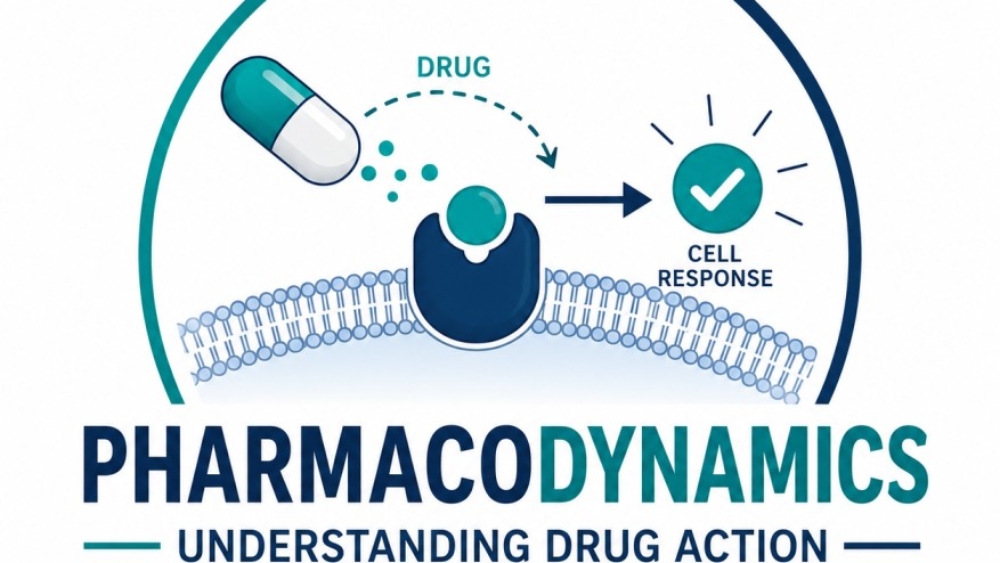
The science of Pharmacodynamics is defined as the study of the effects of the drug on the organism together with the ways these effects are produced. In simple terms, this science asks the following question: “What does the drug do to the body?”
It deals with the effects of the drug interaction with the organism’s receptors, enzymes, ion channels, etc., producing either therapeutic or adverse effects on the body. Another important aspect of this science includes the examination of the effect of drug dose on the body’s response to the medication.
Pharmacodynamics differs from pharmacokinetics that studies the processes of absorption, distribution, metabolism and excretion of the drug.
Basic Principles of Pharmacodynamics.
Several key principles form the foundation of pharmacodynamics.
Drug-Receptor Interaction.
Many drugs exert their effects via interactions with particular proteins known as receptors. Receptors can be found on the surface or within the cells and usually function in response to certain naturally occurring chemicals like hormones and neurotransmitters.
If a drug interacts with a receptor, it may cause activation or inhibition of that receptor. The biological response elicited by the drug will vary based on the type of receptor and the characteristics of the drug.
The drug-receptor interaction can be likened to the lock and key model because only the right drug will interact with the receptor.
Dose-Response Relationship.
The dose-response relationship describes how the body’s response changes with different drug doses.
Generally, increasing the dose increases the therapeutic effect until a maximum response is reached. Beyond this point, higher doses may not improve effectiveness but can significantly increase the risk of side effects or toxicity.
This relationship helps healthcare professionals determine:
- The minimum effective dose
- The optimal therapeutic dose
- The maximum safe dose
- The toxic dose
Drug Receptors and Their Importance.
Drug receptors are specialized proteins that recognize and bind specific molecules. They play a central role in pharmacodynamics because most medications exert their effects through receptor interactions.
The major receptor types include:
G Protein-Coupled Receptors (GPCRs).
These are among the most common drug targets. They regulate numerous physiological processes, including heart rate, hormone release, and nervous system activity.
Many medications used for asthma, hypertension, and allergies work by acting on GPCRs.
Ion Channel Receptors.
Ion channels control the movement of ions such as sodium, potassium, and calcium across cell membranes.
Drugs targeting these receptors help treat epilepsy, heart rhythm disorders, and pain.
Enzyme-Linked Receptors.
These receptors initiate cellular responses by activating enzymes after drug binding.
Certain anticancer medications work by targeting enzyme-linked receptors involved in cell growth.
Intracellular Receptors.
Some drugs cross the cell membrane and bind receptors inside the cell. These receptors often regulate gene expression.
Steroid hormones such as corticosteroids act through intracellular receptors.
Types of Drug Actions.
Drugs can produce different effects depending on how they interact with receptors.
Agonists.
Agonists bind to receptors and activate them, producing a biological response similar to the body’s natural chemicals.
For example, salbutamol acts as an agonist on beta-2 receptors, relaxing airway muscles and improving breathing during asthma attacks.
Antagonists.
Antagonists bind to receptors but do not activate them. Instead, they block the action of natural substances or other drugs.
An example is antihistamines, which block histamine receptors to reduce allergy symptoms
Partial Agonists.
Partial agonists activate receptors but produce a weaker response than full agonists. They can provide therapeutic benefits while reducing the risk of excessive stimulation.
Inverse Agonists.
Inverse agonists produce effects opposite to those of agonists by reducing the natural activity of certain receptors. These drugs are useful in specific neurological and cardiovascular conditions.
Drug Potency and Drug Efficacy.
Two important pharmacodynamic concepts are potency and efficacy.
Drug Potency.
Potency refers to the amount of drug required to produce a particular effect.
A highly potent drug produces the desired response at a lower dose than a less potent drug.
However, higher potency does not necessarily mean the drug is better.
Drug Efficacy.
Efficacy refers to the maximum effect a drug can produce regardless of dose.
A highly efficacious drug produces a greater therapeutic response than one with lower efficacy.
Doctors consider both potency and efficacy when selecting medications for patients.
Therapeutic Index.
Safety is a major concern in drug therapy. The therapeutic index compares the effective dose with the toxic dose of a drug.
A high therapeutic index indicates a wide margin of safety, while a low therapeutic index means careful monitoring is required.
Drugs such as warfarin, digoxin, and lithium have narrow therapeutic indices and require regular monitoring to prevent toxicity.
Factors Affecting Pharmacodynamics.
Many factors influence how individuals respond to medications.
Age:
Children and elderly patients often respond differently to drugs because of physiological differences and changes in receptor sensitivity.
Genetics:
Genetic variations can alter receptor structure or function, making some individuals more or less responsive to specific medications.
Pharmacogenomics is an emerging field that studies these genetic differences to personalize drug therapy.
Disease Conditions:
Diseases affecting the liver, kidneys, heart, or endocrine system can alter drug responses by changing receptor function or physiological processes.
Drug Interactions:
Some medications enhance or reduce the effects of other drugs.
These interactions may improve treatment or increase the risk of adverse reactions.
Tolerance:
Repeated use of certain medications may reduce their effectiveness over time, requiring higher doses to achieve the same effect.
Tolerance commonly develops with opioids and certain sedatives.
Therapeutic Effects and Side Effects.
No medication is completely free from side effects.
Therapeutic Effects.
These are the intended beneficial effects of a drug.
Examples include:
- Reducing blood pressure
- Relieving pain
- Eliminating bacterial infections
- Lowering blood sugar
- Controlling inflammation
Side Effects.
Side effects are unintended effects that occur alongside therapeutic benefits.
Some side effects are mild, such as drowsiness or dry mouth, while others may be serious or life-threatening.
Understanding pharmacodynamics helps researchers design drugs that maximize therapeutic effects while minimizing unwanted reactions.
Drug Selectivity.
An ideal drug would act only on its intended target without affecting other tissues.
Drug selectivity refers to the preference of a drug for a particular receptor or tissue.
Highly selective drugs generally produce fewer side effects because they avoid unwanted interactions with other receptors.
However, no drug is perfectly selective, especially at higher doses.
Receptor Regulation
The body can adjust receptor numbers in response to prolonged drug exposure.
Upregulation
When receptors are blocked for extended periods, cells may produce more receptors to compensate.
Stopping certain medications suddenly may therefore produce exaggerated responses.
Downregulation
Continuous stimulation by agonists can decrease receptor numbers or sensitivity.
This process contributes to drug tolerance and reduced effectiveness over time.
Understanding receptor regulation helps healthcare providers adjust treatment strategies appropriately.
Clinical Applications of Pharmacodynamics
Pharmacodynamics plays an essential role in clinical medicine.
Rational Drug Selection
Healthcare professionals choose medications based on their pharmacodynamic properties to ensure the best therapeutic outcome.
Individualized Therapy
Knowledge of receptor sensitivity, genetics, and disease conditions allows personalized treatment plans tailored to individual patients.
Dose Optimization
Understanding dose-response relationships helps determine the most effective dosage while minimizing toxicity.