Clinical trial

Clinical Trials: Understanding the Stages and Their Importance in Modern Medicine

Each pill and medication that appears in the pharmacy underwent long research from lab experiments to extensive volunteer tests, taking up to a decade or even more to create something really effective and safe. One of the key aspects of such research is the clinical trials.

The Clinical trials play an essential role in the development of any medicine. It is through trials that scientists define if the medicine or another type of therapy is safe and effective. If there was no such research as clinical trials, physicians could not find out anything about the medicine and their patients will be at risk.

During the last years, clinical trials have become more and more evident especially during the COVID-19 pandemic when vaccines were developed and approved in record time without breaking any of the safety rules. Nevertheless, clinical trials are not just about vaccines; they give us everything that medicine provides us with today.

This article describes what clinical trials are, what phases exist, their importance, and what impact they have on medicine.its is very complex in which small pimple like acne produce in our mouth is is pain so much

What Are Clinical Trials?

Clinical trials are carefully designed research studies involving human volunteers. Their primary purpose is to evaluate the safety and effectiveness of medical interventions before they become available to the general public.

These interventions may include:

  • New medicines
  • Vaccines
  • Medical devices
  • Diagnostic tests
  • Surgical procedures
  • Gene therapies
  • Lifestyle and behavioral treatments

Clinical trials follow strict scientific protocols approved by regulatory authorities and ethics committees. Researchers carefully monitor every participant throughout the study to ensure safety and collect accurate data.

Before participating, every volunteer signs an Informed Consent Form, which explains:

  • The purpose of the study
  • Potential benefits
  • Possible risks
  • Study procedures
  • Participant rights

Participation is always voluntary, and volunteers can withdraw from a study at any time without affecting their future medical care.

Why Are Clinical Trials Important?

Modern healthcare relies on scientific evidence rather than assumptions. Laboratory experiments and animal studies provide valuable information, but they cannot accurately predict how the human body will respond to a treatment.

Clinical trials answer critical questions such as:

  • Is the treatment safe?
  • Does it actually work?
  • What dosage provides the best results?
  • Are there any side effects?
  • Who benefits the most from the treatment?
  • What happens after long-term use?

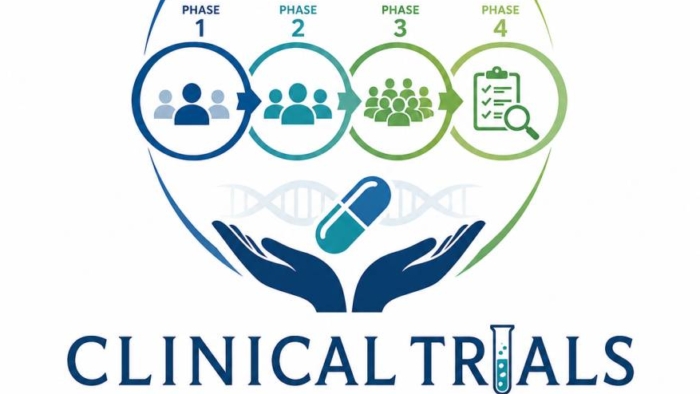
The Four Stages of Clinical Trials

Clinical trials are usually conducted in four sequential phases. Each phase serves a different purpose and gradually builds evidence about the treatment.

Phase I: Safety Evaluation

The first stage involves a small group of healthy volunteers or patients.

Main Objectives

  • Assess safety
  • Determine safe dosage
  • Identify side effects
  • Study how the body absorbs and processes the medicine

Phase II: Testing Effectiveness:

If Phase I results are encouraging, the treatment moves into Phase II.

This stage usually includes 100–300 patients who have the disease or condition the treatment is intended to address.

Researchers evaluate:

  • Treatment effectiveness
  • Optimal dosage
  • Short-term safety
  • Common side effects

Many experimental medicines fail during this stage because they do not demonstrate sufficient effectiveness. However, successful Phase II trials provide confidence for larger studies.

Phase III: Confirming Results:

Phase III is the largest and most comprehensive stage of clinical research.

These trials often involve 300 to several thousand participants across multiple hospitals and countries.

Researchers compare the new treatment with:

  • Existing standard treatments
  • Placebos (where ethically appropriate)

Key goals include:

  • Confirming effectiveness
  • Monitoring safety
  • Detecting uncommon side effects
  • Comparing patient outcomes
  • Collecting evidence for regulatory approval

Because of the large participant population, Phase III provides statistically reliable data that healthcare authorities use when deciding whether to approve the treatment.

Phase IV: Post-Marketing Surveillance:

This kind of research does not end after a drug has been introduced into the market.

Phase IV research continues studying approved medications.

It includes:

Safety of long-term use
Rare adverse reactions
Drug-drug interactions
Effectiveness in other populations
Effects of treatment

In some cases, Phase IV research helps to discover new adverse effects that only become visible when millions of people start taking the medication.

How Clinical Trials Protect Patients

Patient safety remains the highest priority throughout every stage of clinical research.

Several safeguards are built into the process:

Ethics Committee Approval

Every study must be reviewed by an independent ethics committee before recruitment begins.

Regulatory Oversight

National regulatory agencies carefully examine study protocols and monitor compliance.

Informed Consent

Participants receive complete information before deciding whether to join.

Continuous Monitoring

Researchers regularly review participant health and stop the study immediately if serious concerns arise.

Confidentiality

All participant information is securely protected according to privacy regulations.

Who Can Participate?

Clinical trials require participants who meet specific eligibility criteria.

These criteria may include:

  • Age
  • Gender
  • Medical condition
  • Disease stage
  • Previous treatments
  • Current medications
  • General health status

Some studies recruit healthy volunteers, while others specifically seek patients with certain medical conditions. Clinical trials increasingly aim to include participants from diverse backgrounds to ensure treatments work effectively across different populations.

Benefits of Participating in Clinical Trials

Many volunteers choose to participate because they want to contribute to medical progress.

Some potential benefits include:

Access to Innovative Treatments

Participants may receive new therapies years before they become commercially available.

Expert Medical Care

Participants are often monitored by specialists throughout the study.

Helping Future Generations

Every volunteer contributes valuable information that may improve healthcare worldwide.

Advancing Science

Each clinical trial expands medical knowledge and supports future discoveries.

Are Clinical Trials Risky?

Every medical treatment carries some level of risk, including experimental therapies.

Possible risks include:

  • Unknown side effects
  • Treatment may not work
  • Additional hospital visits
  • Frequent medical tests
  • Unexpected reactions

Clinical Trials and Medical Innovation

Many of today’s greatest healthcare achievements exist because of clinical research.

Examples include:

  • COVID-19 vaccines
  • Cancer immunotherapy
  • Artificial heart valves
  • Organ transplantation improvements
  • Diabetes medications
  • HIV treatments
  • Gene therapy
  • Precision medicine

Without clinical trials, these life-changing innovations would never have become available.

Challenges Facing Clinical Trials

Despite their importance, clinical trials face several challenges.

These include:

  • Recruiting enough participants
  • High research costs
  • Lengthy approval processes
  • Maintaining participant diversity
  • Managing large volumes of clinical data

Researchers are increasingly using digital technologies to overcome these challenges. Artificial intelligence, electronic health records, wearable devices, and telemedicine are making clinical research more efficient and accessible than ever before.

The Future of Clinical Research

Healthcare is rapidly evolving, and so are clinical trials.

Future trends include:

  • Decentralized virtual clinical trials
  • AI-assisted patient recruitment
  • Remote health monitoring
  • Personalized medicine
  • Genomic-based therapies
  • Digital data collection
  • Faster regulatory collaboration

Applications of Biotechnology in Healthcare

Introduction to Pharmacology.

Introduction.

Pharmacology is the Branch of science in which study of the drug. Pharmacology is the branch of biomedical science that studies drugs and their interactions with living organisms. It examines how drugs are discovered, how they work, their therapeutic uses, adverse effects, and how the body handles them. The primary goal of pharmacology is to ensure the safe and effective use of medications for the prevention, diagnosis, and treatment of diseases.

Branches of Pharmacology.

There are several major branches of pharmacology such as

  • Pharmacokinetics
  • Pharmacodynamics
  • Clinical Pharmacology
  • Chemotherapy
  • Toxicology
  • Pharmacotherapeutics
  • Pharmacogenetics

1. Pharmacokinetics.

Pharmacokinetics is the branch of pharmacology that studies the movement of drugs through the body over time, including their absorption, distribution, metabolism, and excretion.

Main Processes of Pharmacokinetics:

  • Absorption – Movement of a drug from the site of administration into the bloodstream.
  • Distribution – Transport of the drug from the bloodstream to tissues and organs.
  • Metabolism (Biotransformation) – Chemical alteration of the drug, mainly in the liver.
  • Excretion – Removal of the drug and its metabolites from the body, primarily through the kidneys.

2. Pharmacodynamics.

Pharmacodynamics is the branch of pharmacology that studies the biochemical and physiological effects of drugs on the body and their mechanisms of action.

3. Clinical Pharmacology

Clinical pharmacology is the branch of medical science that deals with the study of drugs and their effects in human beings. It combines the principles of pharmacology with clinical medicine to ensure the safe, effective, and rational use of medicines in the prevention, diagnosis, and treatment of diseases. While pharmacology broadly studies the actions, properties, and mechanisms of drugs, clinical pharmacology specifically focuses on how drugs behave in the human body and how they can be used to achieve the best therapeutic outcomes in patients.

4. Chemotherapy.

Chemotherapy is the treatment of diseases using chemical substances or drugs that selectively destroy or inhibit the growth of harmful microorganisms, parasites, or abnormal cells while causing minimal damage to the host. In modern medicine, the term is most commonly used to describe the treatment of cancer with anticancer drugs.

5. Toxicology.

Toxicology is the branch of pharmacology and medical science that deals with the study of poisons, toxic substances, and their harmful effects on living organisms. It includes the identification, diagnosis, prevention, and treatment of poisoning caused by drugs, chemicals, environmental pollutants, and biological toxins. Toxicology examines how toxic agents enter the body, their mechanisms of action, the damage they cause, and the factors influencing toxicity. It also studies the safe use of chemicals and medicines to prevent adverse effects. The primary goal of toxicology is to protect human health and the environment from harmful substances.

6. Pharmacotherapeutics.

Pharmacotherapeutics is the branch of pharmacology that deals with the use of drugs for the prevention, diagnosis, and treatment of diseases. It focuses on the selection of appropriate medications and the application of pharmacological principles to achieve the best therapeutic outcomes in patients. Pharmacotherapeutics studies the indications, dosage, route of administration, duration of treatment, and monitoring of drug therapy. It also considers factors such as patient age, disease condition, drug interactions, and adverse effects to ensure safe and effective treatment. The main objective of pharmacotherapeutics is to promote the rational use of medicines, improve patient health, minimize risks, and enhance the quality of healthcare and treatment outcomes.

7. Pharmacogenetics.

Pharmacogenetics is the branch of pharmacology that studies how inherited genetic variations influence an individual’s response to drugs. It examines the role of genes in determining drug absorption, distribution, metabolism, excretion, and therapeutic effects. Genetic differences can cause variations in drug efficacy, toxicity, and the risk of adverse drug reactions among individuals. Pharmacogenetics helps healthcare professionals select the most appropriate medication and dosage for each patient, thereby improving treatment outcomes and reducing harmful effects. This field contributes to the development of personalized medicine, where drug therapy is tailored according to a person’s genetic makeup. By understanding genetic factors, pharmacogenetics promotes safer, more effective, and individualized drug treatment strategies for patients.

Biotechnology pic

What is Biotechnology?

Biotechnology

Biotechnology is branch of Science which is uses living organisms, cells, and Biological System to develop product such as new medication, drug, Vaccine, Cream, paste, Capsules, Tablet, syrup, Lotion and also Technologies that is improve human life.

It combines biology, chemistry, genetics and technology to solve problems of patients and Healthcare, agriculture, industry and environmental management.

History of Biotechnogy.

Biotechnology has been used for thousands of years in processes such as bread making, cheese production, and fermentation. Modern biotechnology emerged with advances in genetics and molecular biology during the twentieth century. and making Insulin production, vaccines, patches and many more product or technologies which is more helpful for curing disease or disorder.

Types of Biotechnology.

Biotechnology categories according to there manufacturing product if the studying to medical field then the Biotechnology called Red Biotechnology. According to manufacturing process Biotechnology categorised into four types.

  • Red Biotechnology
  • Green Biotechnology
  • White Biotechnology
  • Blue Biotechnology

Red Biotechnology.

Red Biotechnology is the branch of biotechnology that is focuses on medical and Healthcare application. It involves using biological organisms, cells, genes, and biomolecules to develop products and technologies for diagnosing, preventing, and treating disease or disorders.

Green Biotechnology.

Green Biotechnology is the branch of biotechnology that is focuses on agriculture and plant-related applications. It uses biological techniques to improve crops, increase agricultural productivity, enhance nutritional value, and promote environmentally sustainable farming practices.

White Biotechnology.

White Biotechnology (also called industrial biotechnology) is the branch of biotechnology that is applies biological organisms, enzymes, and cellular processes to industrial production and manufacturing. Its goal is to develop efficient, sustainable, and environmentally friendly industrial processes.

Blue Biotechnology.

Blue Biotechnology is the branch of biotechnology that is focuses on the use of marine and aquatic organisms (such as fish, algae, bacteria, fungi, and other ocean resources) for developing useful products and technologies.

Uses of Biotechnology.

Biotechnology has more useful in many fields, including medicine, agriculture, industry, and environmental management.

1. Medical and Healthcare Applications

  • Production of medicines such as insulin and vaccines.
  • Development of gene therapy and stem cell therapy.
  • Early diagnosis of diseases using molecular techniques.
  • Production of therapeutic proteins and antibodies.
  • production of new patches and new dosage form.
  • etc

2. Agricultural Applications

  • Development of high-yield and disease-resistant crops.
  • Production of pest-resistant and drought-tolerant plants.
  • Use of biofertilizers and biopesticides.
  • Plant tissue culture for rapid multiplication of plants.

3. Industrial Applications

  • Production of enzymes for detergents, food processing, and textiles.
  • Manufacture of biofuels such as ethanol and biodiesel.
  • Production of biodegradable plastics.
  • Fermentation-based production of chemicals and pharmaceuticals.
  • etc

4. Environmental Applications

  • Bioremediation of polluted soil and water using microorganisms.
  • Waste treatment and recycling.
  • Control of environmental pollution.
  • Conservation of biodiversity.
  • Protecting nature by biofertilizers
  • etc

5. Food Industry Applications

  • Production of yogurt, cheese, bread, and fermented foods.
  • Improvement of food quality and nutritional value.
  • Enhancement of food preservation and safety
  • Etc

6. Marine Applications

  • Development of medicines from marine organisms.
  • Improvement of aquaculture and fish farming.
  • Production of bioactive compounds and biofuels from algae.
  • Etc